
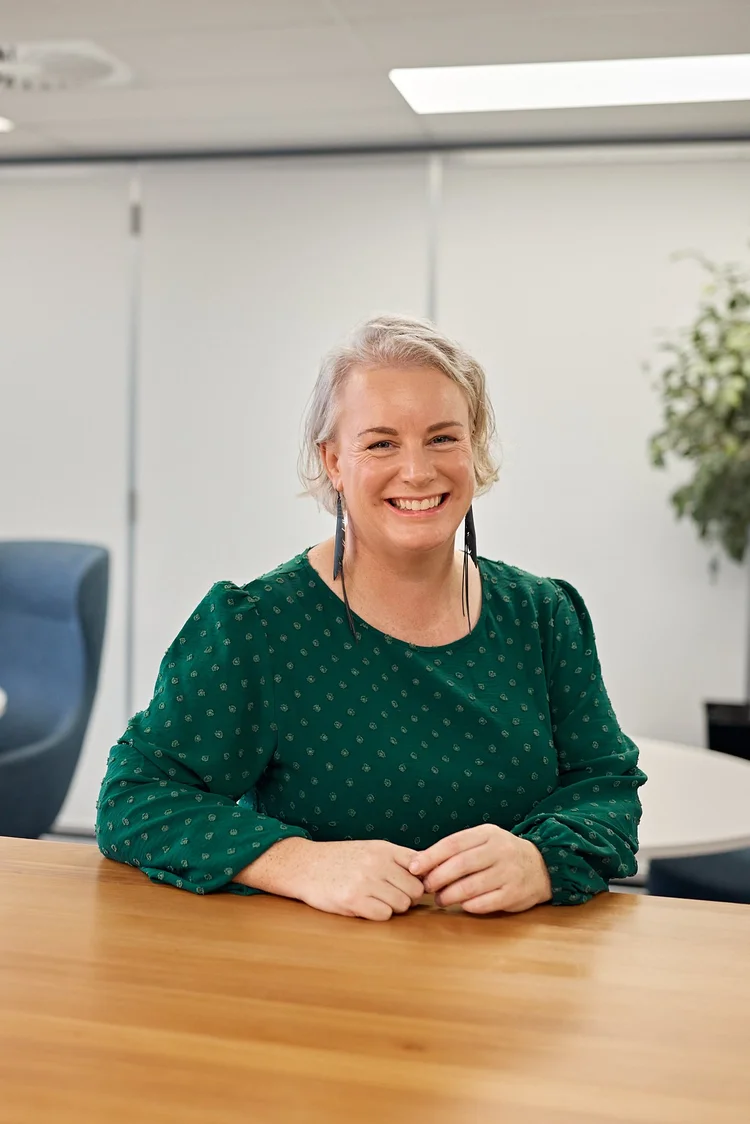
Jen Southan
Part-time work is important to me because work matters to my sense of self, and I want to feel like I have something to contribute to my workplace and the wider practice of People, Culture and Wellbeing in Aotearoa.
In 2020, when my daughter was born amidst the chaos of Covid, I was diagnosed with Postnatal Depression – on reflection, not surprising when I was a new Mum, with all the hormonal crashes and being absolutely isolated from most of the people I love. As a result of PND, I’ve learned that I am an “all-in” person, which means when I am at work – I am absolutely at work. It also means that at home on weekends I am the same, absolutely all in. Working part-time gives me one beautiful day to make sure my brain has a chance to slow down a bit, which is good for me and my ability to show up fully, both at work and at home. I get life admin done at my own pace, which helps balance out that mental load that working Mums carry (it’s the whole ‘fitting your own oxygen mask first’, right?). It’s allowed me to study part-time (currently working through certificates in Te Reo and Tikanga Māori through Te Wānanga o Aotearoa). Plus, it’s a good chance to check in with myself. I don’t think I would operate as effectively as I do without my magic day. It gives my brain space to process, which I think leads to better decision-making. It helps lessen Mum guilt, which takes away some of that daily distraction, and means I can be present with my kids and go to their assemblies. I will also add here, importantly, that my partner is 200% supportive of me having the day as well.
An interesting reflection I had in 2025, when I was speaking at a (Wellbeing Professionals) conference and was on a panel, was that we had a discussion around how part-time and flexible work is a game-changer for employee wellbeing. BUT – they asked for a show of hands around the room of who had part-time hours, and it was telling that I was the only one on the panel who put my hand up. I really feel like I am ‘practising what I am preaching’, and it was a powerful moment – I felt like it showed that being good/known/respected for your work isn’t exclusive to those who work full-time hours.
What I will say is that communicating is important when it comes to part-time hours; for me, that communication is in practical ways, i.e. I’ve got my working days in my email signature, I set an out-of-office for my day away, and I block out my Outlook calendar so it’s obvious if anyone is trying to schedule meetings. As a Senior Leader, I also feel it’s important I share my experience of part-time work and advocate for it (and for those who are working or would like to work part-time) – it’s an area I can influence in my position, and I know, and have experienced, the benefits of having committed part-time employees.
What I wish others knew about part-time roles in leadership positions is that the people in these roles are often as, if not more, effective in their roles. This is because they are balanced, they use time effectively, and they prioritise and delegate well. Not only that, but they are more fulfilled in their lives, so, in my experience, it fast-tracks leadership qualities because part-time work is purposeful.