
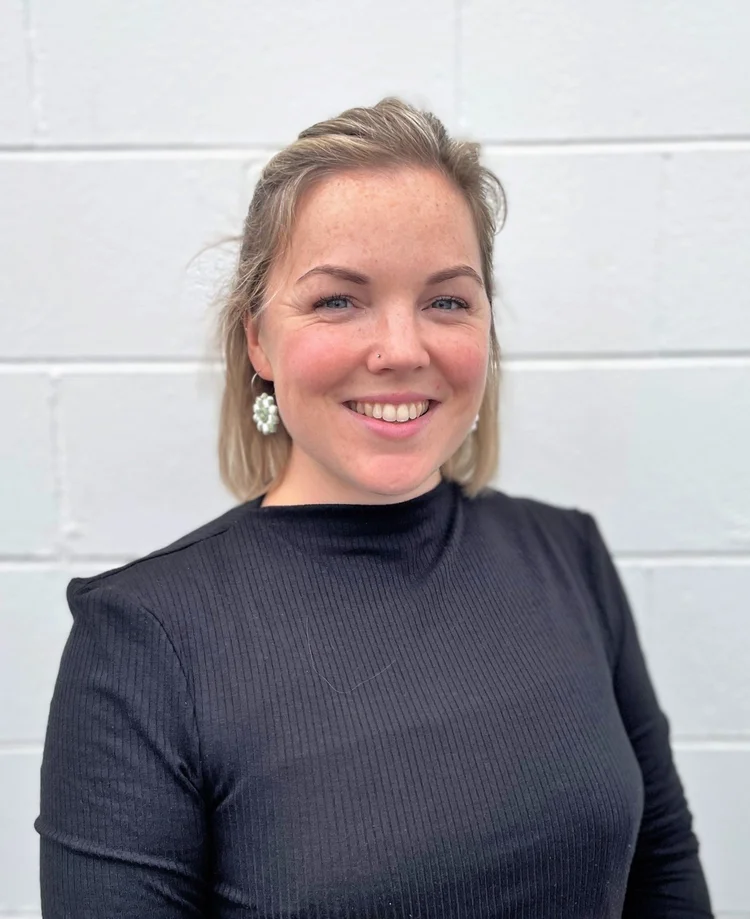
Emily Hilton
Working part-time has allowed me to continue building a career that I find challenging and meaningful while also being the kind of parent I want to be.
My daughter and I have Fridays together. Since she was only a few weeks old, we have had a standing Friday ritual: we visit my favourite local bakery for a coffee, fluffy and pastry. Over time we've become part of the fabric of that little community, and now it's something we both look forward to every week. It probably sounds like a small thing, but it's genuinely the highlight of my week.
As she gets older, those Fridays are evolving. We'll spend more time outdoors, exploring trails and places that are important to me. Having dedicated one-on-one time allows us to build our own relationship, separate from the busy pace of everyday life and separate from our wider family routine.
Without part-time work I would likely still have a successful career, but I would have far fewer opportunities to be intentionally present during these early years. Working reduced hours has allowed me to invest in both parts of my identity: as a senior leader and as a mother.
I wish more people knew that reduced hours and ambition are not mutually exclusive. You don't have to choose between being ambitious and being present. You simply need to find an environment that allows you to be both. Since becoming a mother, I've continued leading a growing function, influencing company strategy, supporting major infrastructure developments, and helping navigate complex regulatory environments. Becoming a parent changed how I work, but it didn't change what I'm capable of. If anything, it made me more decisive, more efficient and more purposeful. The right employer will judge you on your contribution and impact, not the number of hours you're physically present.
The key is recognising that nobody gets through every item on their to-do list anyway. Before becoming a parent, I probably spent more time trying to complete everything. Now I'm clearer about what actually matters. The important and urgent work gets done, and I have become comfortable with the fact that some lower-value tasks can wait. Since becoming a mother and returning to work on a part-time basis, my career has continued to progress significantly. Just a few months after returning from parental leave, I was promoted to Head of HSEQ at Hiringa Energy, taking on responsibility for HSEQ leadership across a rapidly growing business operating in multiple renewable energy sectors.
Since then, I have represented Hiringa at a Standards New Zealand event in Wellington, spoken at a conference for New Zealand certifiers, and hosted an interview panel for a regional energy forum. These opportunities have allowed me to contribute to industry discussions while representing both my organisation and the wider renewable energy sector.
Within Hiringa, I have led the maturation of our HSEQ capability by driving a rigorous procurement process to select a company-wide HSEQ management platform. This involved developing the business case, securing support from the Executive Leadership Team and Board, and leading implementation and organisational adoption.
I also led the work required to achieve nationally recognised accreditation of our HSEQ systems and processes, providing independent validation of the standards we have established as the business grows.
Perhaps most importantly, these achievements have all occurred while working a four-day week. They demonstrate that career advancement, leadership opportunities and meaningful organisational impact do not need to pause when someone becomes a parent or chooses to work reduced hours.